



Fake US University Admission Scams: How Pakistani Students Can Stay Safe
Published On 17 Oct 2026
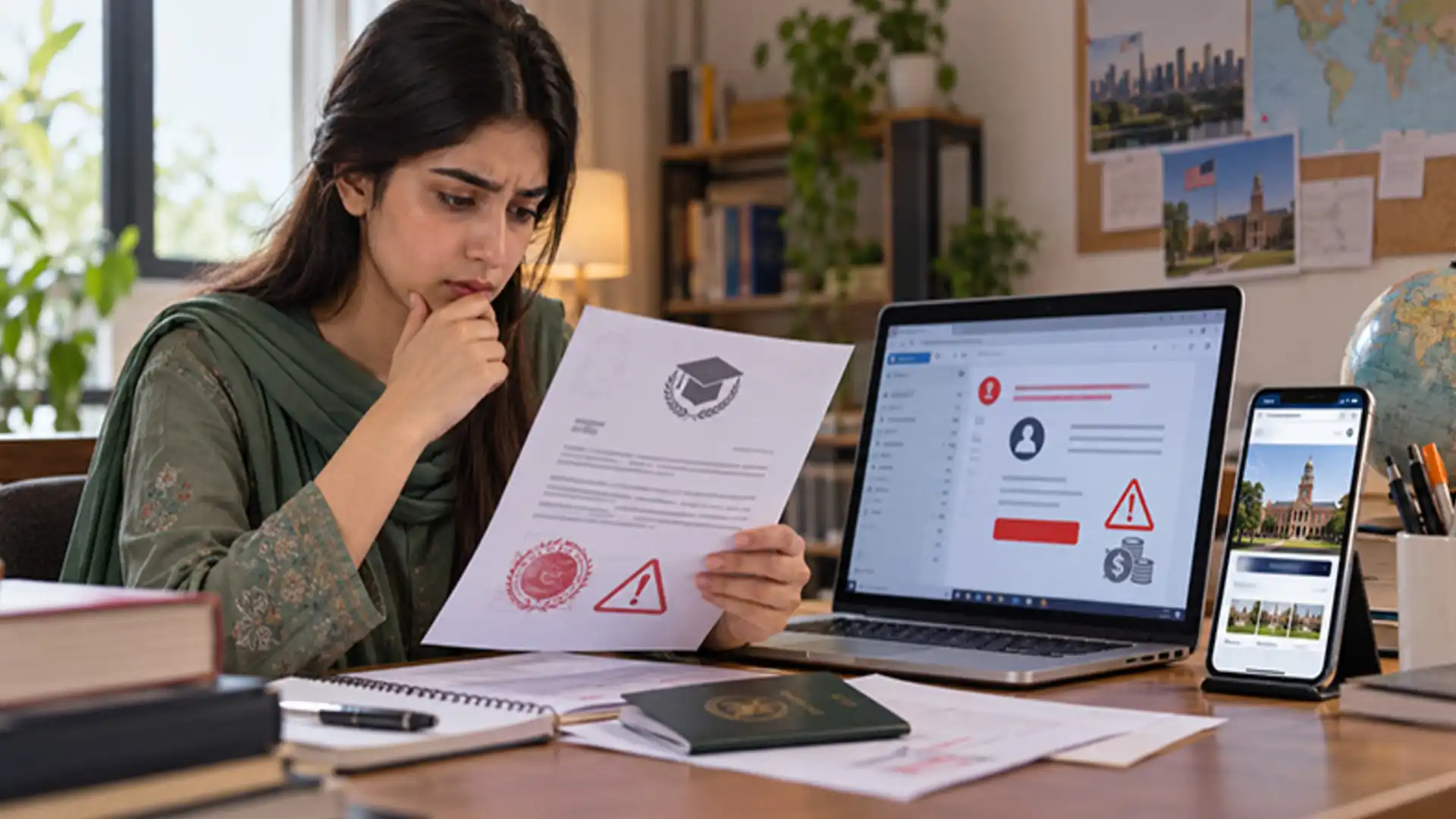
Studying in the United States is a dream for many Pakistani students who want to gain quality education and build successful careers. However, some students and families face financial losses when they trust people who promise university admission, scholarships, or visa approval without proper proof.
A recent case reported by 9 News HD has raised concerns about alleged admission fraud. According to the report, a student in Islamabad and their family faced serious difficulties after allegedly paying millions of rupees to a consultant who promised admission to a US university. The documents were later reportedly found to be fake, and the case is under investigation.
Such incidents show why students must check every admission offer before paying money or sharing personal information. Fake US University Admission Scams can affect students financially and emotionally, especially when families use their savings to support overseas education.
In this article, 9 News HD explains the warning signs of admission fraud and the steps Pakistani students can take to protect themselves.
What Are US University Admission Scams?
US university admission scams happen when a person or agency uses false information to take money from students who want to study in the United States.
Scammers may pretend to be official university representatives, education consultants, or scholarship providers. They may use fake documents, copied university logos, or false promises to make their offers look genuine.
Some may claim they have special contacts with universities and can arrange admission without following the normal process. Others may promise a guaranteed scholarship or student visa in exchange for a large payment.
Students should remember that a genuine admission process involves official requirements, accurate documents, and decisions made by the relevant institutions. No private agent can honestly guarantee every admission or visa outcome.
What Warning Signs Should Students Look For?
Recognising warning signs early can help students avoid losing money or important documents.
1. Guaranteed Admission or Visa Approval
Be careful if an agent promises guaranteed admission or says a US student visa is certain after paying a fee. Universities review applications according to their admission requirements, while visa decisions are made through the official process.
A consultant may help with paperwork, but a promise of guaranteed approval should raise questions.
2. Pressure to Pay Immediately
Some dishonest agents create urgency by saying that a scholarship will disappear or a university seat will be lost unless the student pays immediately.
Before making any payment, take time to check the offer. Ask for written details about the university, programme, fees, refund policy, and services included in the agreement.
A genuine opportunity should allow you to understand the terms before committing your money.
3. Fake Admission Letters and Documents
A document may look official because it contains a university logo, signature, or reference number. However, these details alone do not prove that the offer is genuine.
Students should contact the university's admissions office using contact information found on its official website. Ask the institution to confirm whether the admission letter and application details are authentic.
4. Unclear Fees and Payment Requests
Be cautious when an agent refuses to provide a written fee breakdown or asks you to transfer money to an unrelated personal account.
Request a receipt for every payment and confirm who is receiving the money. Whenever possible, pay university fees through the institution's official payment system.
How Can Pakistani Students Verify a US University Admission Offer?
Checking an admission offer before paying money is one of the most important steps in the application process.
Check the University's Official Website
Search for the university independently rather than relying only on a link provided by an agent. Review its admissions page, available programmes, application requirements, and official contact details.
If you receive an admission letter, contact the university directly to confirm that it issued the document.
Confirm the University's Recognition and Accreditation
Students should check whether the institution is properly authorised and whether its qualifications meet their academic or professional goals.
For a US institution, review its accreditation status through reliable official sources. Students should also confirm that the programme is suitable for their intended career, particularly if they plan to return to Pakistan for professional work.
Contact the Admissions Office
Send an email to the university's official admissions office if anything seems unusual. Include the application reference number and ask whether the offer is genuine.
Do not depend entirely on screenshots, forwarded emails, or documents shared through WhatsApp. Direct confirmation from the institution is more reliable.
Read the Agreement Before Signing
If you use an education consultant, ask for a written agreement that explains the services, fees, refund conditions, and responsibilities of both parties.
Keep copies of the agreement, receipts, emails, and all submitted documents. These records may be useful if a dispute occurs.
How Can Students Protect Their Money and Personal Information?
Students often share passports, academic records, bank statements, and other personal details during admission applications. These documents should be handled carefully.
Follow these precautions:
- Avoid large advance payments: Do not pay a major amount without verifying the service and understanding the agreement.
- Keep payment records: Save receipts, bank transfer details, and written communication.
- Protect personal documents: Share sensitive information only when necessary and with verified recipients.
- Check email addresses: Look carefully for misspellings or unusual domains that may imitate a university's official email address.
- Do not share verification codes: Never give an agent your account passwords, one-time passwords, or banking security codes.
- Ask for a second opinion: Discuss an unfamiliar offer with your family, teachers, or a trusted education adviser before making a decision.
These simple steps can help students make safer choices and reduce the risk of financial loss.
What Should You Do If You Suspect an Admission Scam?
If you think an agent has given you fake documents or taken money through false promises, act quickly.
First, save all available evidence, including payment receipts, chat messages, emails, contracts, and copies of the documents provided. Avoid deleting conversations that could help explain what happened.
Next, contact your bank or payment provider if you have transferred money. Ask whether any protective action is possible. Report suspected fraud to the relevant authorities in Pakistan and seek advice about the appropriate complaint process.
You should also contact the university directly to confirm whether it received your application or payment. If the admission documents are fake, ask the institution how to protect your application records and personal information.
Do not pay additional money to someone who claims they can recover your lost funds without clear proof of their service. Recovery promises can sometimes be another way to target people who have already suffered a loss.
For more details about the recent case, read 9 News HD's report on the alleged US admission scam.
Why Is Admission Verification Important for Pakistani Students?
Overseas education can provide valuable academic and career opportunities, but students need accurate information before making major financial decisions.
Families may spend years saving money for tuition fees, travel, and living expenses. A false admission offer can put these plans at risk and create unnecessary stress.
Checking university details, reviewing agreements, and confirming documents directly with the institution can help students make informed decisions. It is also important to understand that admission, scholarships, and student visas involve separate requirements and decisions.
Students should compare their options carefully instead of choosing an agent simply because they promise quick results.
Conclusion
Applying to a US university requires careful planning, accurate documents, and reliable information. Students should never rely only on an agent's promises, especially when large payments or guaranteed admission and visa claims are involved.
By checking admission letters directly with universities, reviewing fees, protecting personal information, and keeping payment records, Pakistani students can reduce the risk of education fraud.
9 News HD aims to keep readers informed about important public-interest issues, including education, student safety, and fraud awareness. For more updates and reports, visit the 9 News HD homepage.
Before paying an agent or accepting an admission offer, take time to verify the details. A careful decision today can help protect your family's money and your future education plans.